
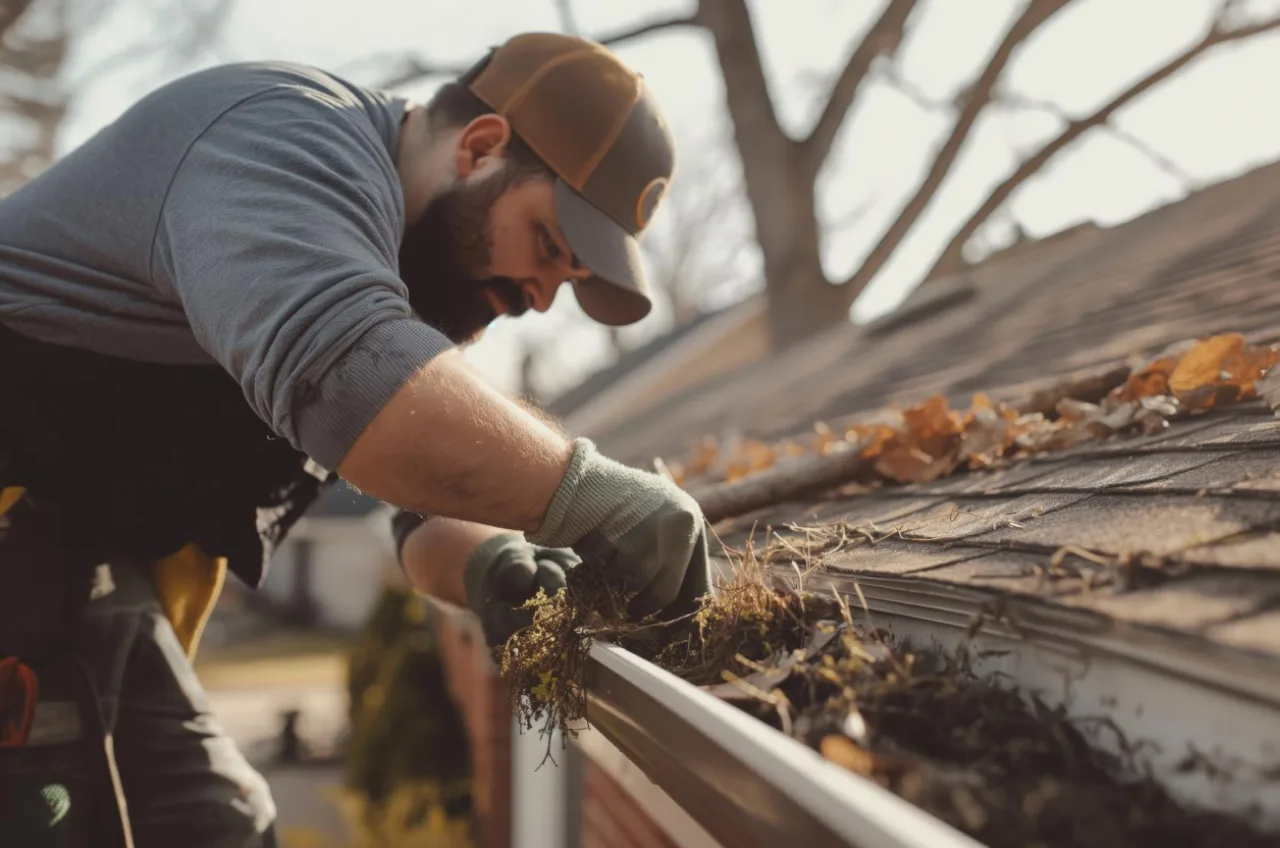
You’re going to learn how to tell the difference between a gutter problem you can patch and one that’s quietly setting you up for a much bigger repair bill. Most homeowners only think about their gutters when water is visibly overflowing — but by the time that happens, the underlying issue has often been building for months. This guide walks through the signs that separate a simple fix from a job that needs a professional look.
Key Takeaways
- Small leaks, minor sagging, or a few loose brackets are usually quick fixes — but recurring versions of these signs point to a bigger problem.
- Rust, separated seams, and pulling away from the fascia board are signs the system itself is failing, not just a section of it.
- Water damage on siding, foundation, or fascia means the gutters have already stopped doing their job.
- Ignoring early warning signs almost always costs more than addressing them early.
- A professional inspection is the only reliable way to know whether you’re looking at a repair or a replacement.
How to Tell When Your Gutters Need More Than a Quick Fix — the core question to ask
When you notice something off with your gutters, the real question isn’t “is there a problem?” — it’s “is this an isolated issue, or a sign the whole system is wearing out?” A single loose bracket or a small drip at one seam is normal wear and tear. But when those same issues start showing up in multiple spots, or keep coming back after you’ve addressed them, that’s your gutters telling you the fix needs to go deeper than a patch.
If you’ve read our article on common gutter repairs, from fixing leaks to rust and loose sections, you already know that most individual issues have straightforward solutions. The distinction that matters here is frequency and pattern — one leak is a repair, five leaks across the system is a sign of age.
Signs your gutters are still in “quick fix” territory
- A single small leak at one seam or joint, with no other issues nearby.
- One section sagging slightly, usually from a loose or missing hanger.
- Minor debris buildup causing occasional overflow during heavy rain.
- A downspout that’s become loose or slightly misaligned.
- Isolated surface rust spots that haven’t spread or created holes.
If what you’re seeing matches this list, and it’s a one-off issue, a targeted repair is usually enough. Our guide on common gutter problems and how to fix them covers the DIY-friendly version of these fixes.
Signs your gutters need more than a quick fix
- Water damage on the fascia board, siding, or foundation — this means water has been overflowing or leaking long enough to cause secondary damage.
- Gutters pulling away from the roofline in multiple spots — a sign the fasteners or the fascia itself may be compromised, not just one bracket.
- Rust that’s spread across sections, with visible holes or flaking metal — surface rust is cosmetic; spreading rust means the material is failing structurally.
- Seams separating or gutters sagging in more than one place — this often points to age-related wear across the whole system, not an isolated defect.
- Recurring clogs even after cleaning — this can indicate pitch problems (the gutter no longer slopes correctly toward the downspout) rather than just debris.
- Visible warping or an uneven gutter line when viewed from the ground — a strong sign the system has shifted or is failing structurally.
If you’re seeing rust as one of your symptoms, it’s worth understanding the difference between surface rust and structural rust before deciding on a repair versus replacement — our article on common gutter repairs breaks this distinction down in more detail.
Why these signs matter more together than alone
One symptom on its own rarely tells the whole story. A single sagging section could just be one loose hanger. But sagging in three different spots, combined with a rusted seam and a bit of water staining near the foundation, tells a different story — it suggests the whole system is reaching the end of its usable life, not just one part of it.
This is also why regular maintenance matters so much. If you’re keeping up with a routine cleaning and inspection schedule, as outlined in essential tips for maintaining your gutters year-round, you’re far more likely to catch these patterns early, while they’re still isolated issues rather than a system-wide failure.
What happens if you ignore the bigger signs
- Water damage spreads from the gutters to the fascia, soffit, and eventually the roof deck.
- Foundation issues can develop from water pooling at the base of the house instead of draining away.
- Landscaping and siding take on moisture damage that’s expensive to reverse.
- Pest problems increase, since standing water and rotting wood attract insects and rodents.
- What started as a $200 repair can turn into a $3,000+ replacement and repair project.
Our piece on how to prevent gutter leaks and keep your roof dry goes deeper into how gutter failures connect directly to roof and structural issues if left unaddressed.
How to evaluate your gutters — a practical walkthrough
If you’re not sure which category your gutters fall into, work through this:
- Walk the perimeter of your house after a rainstorm and look for overflow points.
- Check the fascia board behind the gutters for staining, softness, or peeling paint.
- Look at the gutter line from a distance — does it run straight, or does it dip and wave?
- Inspect seams and end caps for separation or visible daylight between sections.
- Note how many separate issues you’re seeing, not just how severe any one of them looks.
- If you count three or more distinct problem areas, treat it as a system-wide issue rather than a spot repair.
Repair vs. Replacement: quick comparison
| Signal | Likely a Repair | Likely Needs Replacement |
|---|---|---|
| Number of problem areas | One isolated spot | Multiple spots across the system |
| Rust | Light surface rust | Spreading rust with holes |
| Sagging | One section, one hanger | Sagging in several places |
| Water damage | None visible | Fascia, siding, or foundation staining |
| Age of gutters | Under 10–15 years | Approaching or past expected lifespan |
| Recurring issues | First occurrence | Same problem returns after repair |
If your gutters are approaching the end of their expected lifespan, it may also be worth comparing materials before a full replacement — our guide on types of gutters and which material is best for your home is a useful starting point.
Best practices to catch problems before they escalate
- Inspect your gutters at least twice a year, and after any major storm.
- Don’t wait for visible overflow to check for clogs — inspect proactively.
- Address small leaks and loose sections as soon as you spot them.
- Keep a simple log of repairs — recurring issues in the same spot are a red flag.
- Consider gutter guards to reduce debris buildup between inspections, as covered in gutter guards: are they worth the investment.
- When in doubt, get a professional opinion rather than guessing between repair and replacement.
Quick Summary — When Your Gutters Need More Than a Quick Fix
A single leak, loose bracket, or minor sag is usually a simple repair. But when you see multiple problem areas, spreading rust, recurring clogs, or visible water damage on your fascia, siding, or foundation, your gutters are signaling a bigger issue. Catching the pattern early — not just the individual symptom — is what keeps a $200 fix from turning into a full replacement.
Conclusion
Knowing when your gutters need more than a quick fix comes down to pattern recognition, not guesswork. One isolated issue is usually a simple repair. Multiple problem areas, spreading rust, or visible water damage are signs the whole system needs a closer look. Don’t wait for water to show up inside your home to take these signs seriously — a professional inspection now is almost always cheaper than the repair bill later. Not sure which category your gutters fall into? Contact AJ Gutters LLC for a professional inspection and honest recommendation.
Frequently Asked Questions
How do I know if my gutters need a full replacement instead of a repair?
If you’re seeing multiple problem areas — sagging in several spots, spreading rust, separated seams, and visible water damage on the fascia or siding — that combination usually points to replacement rather than a series of individual repairs.
Is rust on my gutters always a serious problem?
Not always. Light surface rust is often cosmetic and can be treated. But rust that’s spreading, flaking, or creating actual holes in the metal is a structural issue and usually means that section needs to be replaced.
Can a sagging gutter be fixed without replacing the whole system?
Yes, if it’s isolated to one section caused by a loose or missing hanger. If sagging shows up in multiple places, it often points to broader wear across the system.
How often should I have my gutters professionally inspected?
Twice a year is a good baseline, ideally in spring and fall, plus an extra check after any major storm.
What’s the risk of waiting to fix a small gutter leak?
A small leak left unaddressed can lead to fascia rot, foundation damage, and pest problems over time — turning a low-cost repair into a much more expensive project.